

Most people who book a limo or black car do it in a few minutes, on their phone, often from an airport or a hotel. If your website makes them hunt for a price, a phone number or a booking button, they go back to Google and pick the next company. After building more than ten websites for limo and car service companies in Boston, Orlando and Southern California, these are the ten things we make sure every one of them has.
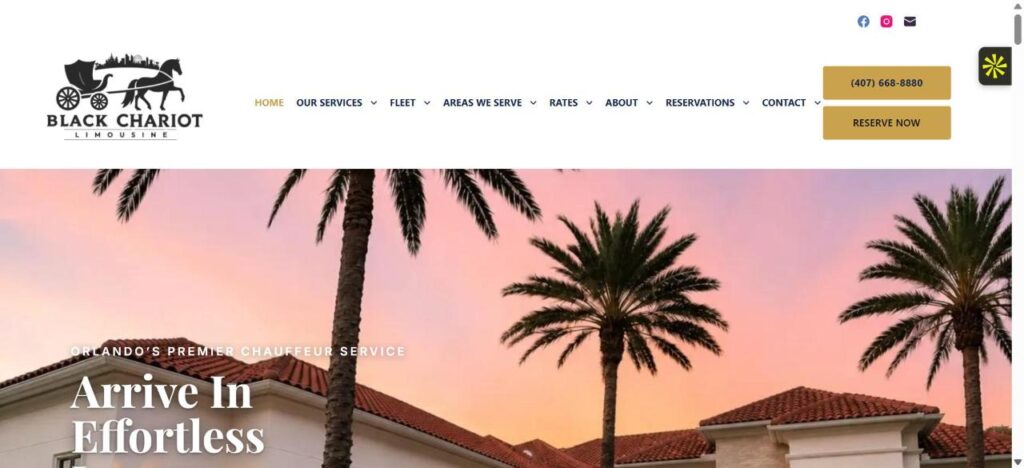
1. A booking button people see in the first second
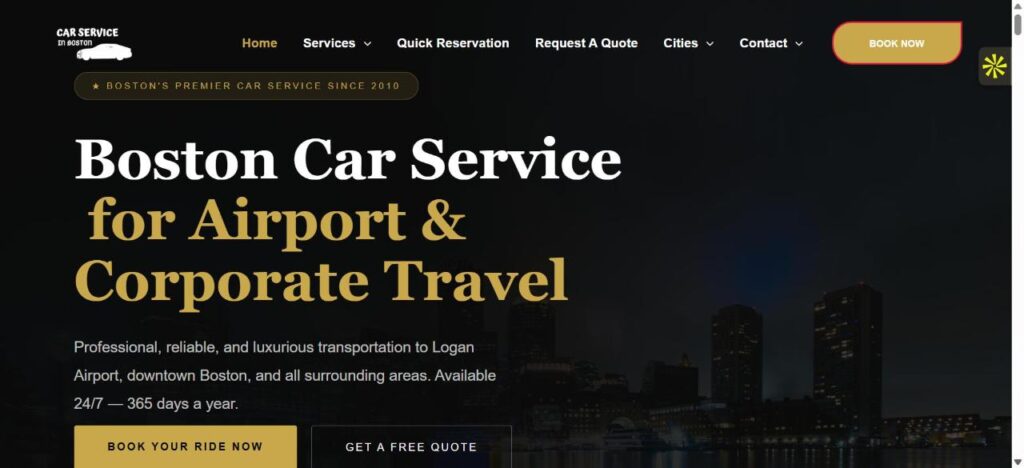
The single most important element on a limo website is a clear way to book. Put a Reserve now or Get a quote button at the top of every page, and repeat it after each main section. Use one action wording across the whole site so riders never have to think about which button to press.
2. Click-to-call on mobile
Many limo customers would rather call than fill in a form, especially for same-day rides. On phones, make the number a tap-to-call link and keep it visible in the header. A sticky call or book button at the bottom of the screen works well too.
3. A site that loads fast on phones
Riders often search from a weak airport or roaming connection. Large uncompressed photos and heavy page builders make a site slow to show anything. Compress images, use modern formats like WebP, keep plugins to a minimum and test the site with Google PageSpeed Insights on mobile, not just on a desktop.
4. Clear service pages
Give each main service its own page instead of one long list: airport transfers, corporate travel, weddings, proms, hourly chauffeur service, and so on. Each page should say who it is for, which vehicles fit, how booking works and what is included. Separate pages also give Google a clear page to show for each type of search.
5. Airport and area pages
Airport rides are one of the most common searches in this industry. If you serve specific airports or cities, give them their own page with real details: pickup points, how meet-and-greet works, flight tracking and wait times. Only create pages for places you really serve, and write each one properly. Copy-pasted pages with only the city name changed rarely rank and can hurt the rest of the site.
6. A fleet page with real photos
People want to see the car that will pick them up. Show each vehicle with real photos, the number of passengers and bags it fits, and which services it is best for. Stock photos of cars you do not own damage trust the moment the real car arrives.
7. Real reviews, with permission
Reviews are what turn a visitor who is comparing three companies into a booking. Show real reviews from real clients, word for word, and link to your Google Business Profile so people can see more. Never invent testimonials; it is misleading and against the rules of most review platforms.
8. Simple, honest pricing information
You do not have to publish every price, but riders want an idea before they call. Popular routes with a starting price, or a clear note that quotes are free and fast, both work. Avoid hidden surprises: say what is included, such as tolls, gratuity or wait time, or tell people to ask.
9. A short quote form
Keep the form to what you need to send a quote: name, phone or email, pickup, drop-off, date and time, passengers and vehicle type. Every extra field loses a few customers. Send an instant confirmation so the rider knows the request arrived.
10. A website and Google Business Profile that match
Your name, phone number, service area and hours should be exactly the same on your website and your Google Business Profile. This helps Google trust both and helps you show in map results. Link the website to the profile and the profile back to the website’s booking page.
Quick checklist
- Book or quote button at the top of every page
- Tap-to-call phone number on mobile
- Fast loading on a phone (test with PageSpeed Insights)
- One page per main service
- Real airport and area pages, only where you operate
- Fleet page with real photos and capacity
- Real reviews and a link to your Google profile
- Clear pricing information or a fast free quote
- A short quote form with instant confirmation
- Same name, phone and hours on the site and Google Business Profile
Next step: learn how limo companies can rank for “airport car service” searches.
Frequently asked questions
How much does a limo website cost?
It depends on the number of pages, the booking setup and the content you need. We send a custom quote after a free 30-minute call.
Can my website connect to my booking software?
Usually, yes. Most limo booking systems give you a booking link or a widget we can place on the site, so riders book without leaving your website.
Will a new website get me to the top of Google?
A well-built site is the foundation, but nobody can guarantee rankings. Monthly SEO and an active Google Business Profile do most of the work over time.
Want to see these ideas on real sites? Browse our work or read about our limo website design and Google Business Profile management services.
Want a limo website that brings in bookings?
Book a free 30-minute call. We’ll look at your current site and tell you exactly what we’d change.